Most emergency food advice goes too extreme. You don't need a bunker full of freeze-dried meals — you need food you'll actually eat and rotate. Here's a practical system that works.
Quick Comparison
Tier 1: Everyday Pantry Foods
The biggest mistake is buying food you've never tried. Start with shelf-stable versions of what you already eat — canned goods, nut butters, oats, rice, and pasta. These rotate naturally into your grocery routine.
- Canned beans, vegetables, and soups
- Rice and pasta (store in airtight containers)
- Nut butters (high calorie density, long shelf life)
- Oats and granola

OXO Good Grips Manual Can Opener
Keep two — they break when you need them most.
Tier 2: Long-Life Staples
Once you have a short-term supply in place, build a deeper reserve with foods that last 10-25 years. These don't need frequent rotation but cost more.

Augason Farms 30-Day Emergency Food Supply
Complete 30-day supply, organized and easy to store. Long shelf life.
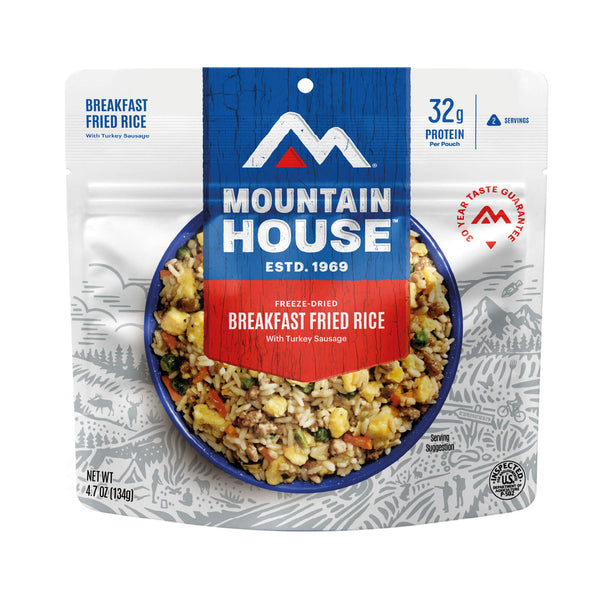
Mountain House 14-Day Freeze-Dried Bucket
Just-add-water freeze-dried meals. 30-year shelf life, familiar flavors.

Mylar Bags + Oxygen Absorbers
Seal bulk rice, beans, and grains for 20-30 year storage. Cost-effective for large quantities.
Tier 3: Compact Rations
For go-bags and space-constrained setups, compact rations pack maximum calories into minimal space.

Datrex 3,600 Cal Emergency Ration
One day of calories in a compact bar. No prep, 5-year shelf life.
Tier 4: Comfort + Morale
Morale is part of survival. Include foods that boost spirits during a stressful situation — protein bars, coffee, chocolate, and electrolyte drinks.

Clif Bar Variety Pack
Calorie-dense, familiar, good shelf life. Include a variety so they don't go stale in the kit.

Liquid I.V. Hydration Multiplier
Electrolyte packets. Critical when water is limited and stress is high.
The Simple System
- Eat what you store — buy shelf-stable versions of familiar foods
- Rotate regularly — first in, first out
- Build slowly — even a 3-day supply is better than none
- Store a manual can opener with your food supply
The best emergency food plan is one you'll actually use — not one that sits untouched for years.
Track your food supply in +MAP.
+MAP's Food Security module tracks your household's storage by category and timeline — so you always know how prepared you actually are.
Join now for freeThe guides are free. The platform makes them stick.
Most groups download a checklist and nothing changes. MAP gives your group the infrastructure to actually act on it — skill tracking, task assignment, event coordination, and a shared knowledge base your members can find offline.
- No more tracking member skills in a spreadsheet
- No more losing resources in group chats
- No more showing up to a crisis figuring it out for the first time
No spam. No pressure. Early access when we launch.