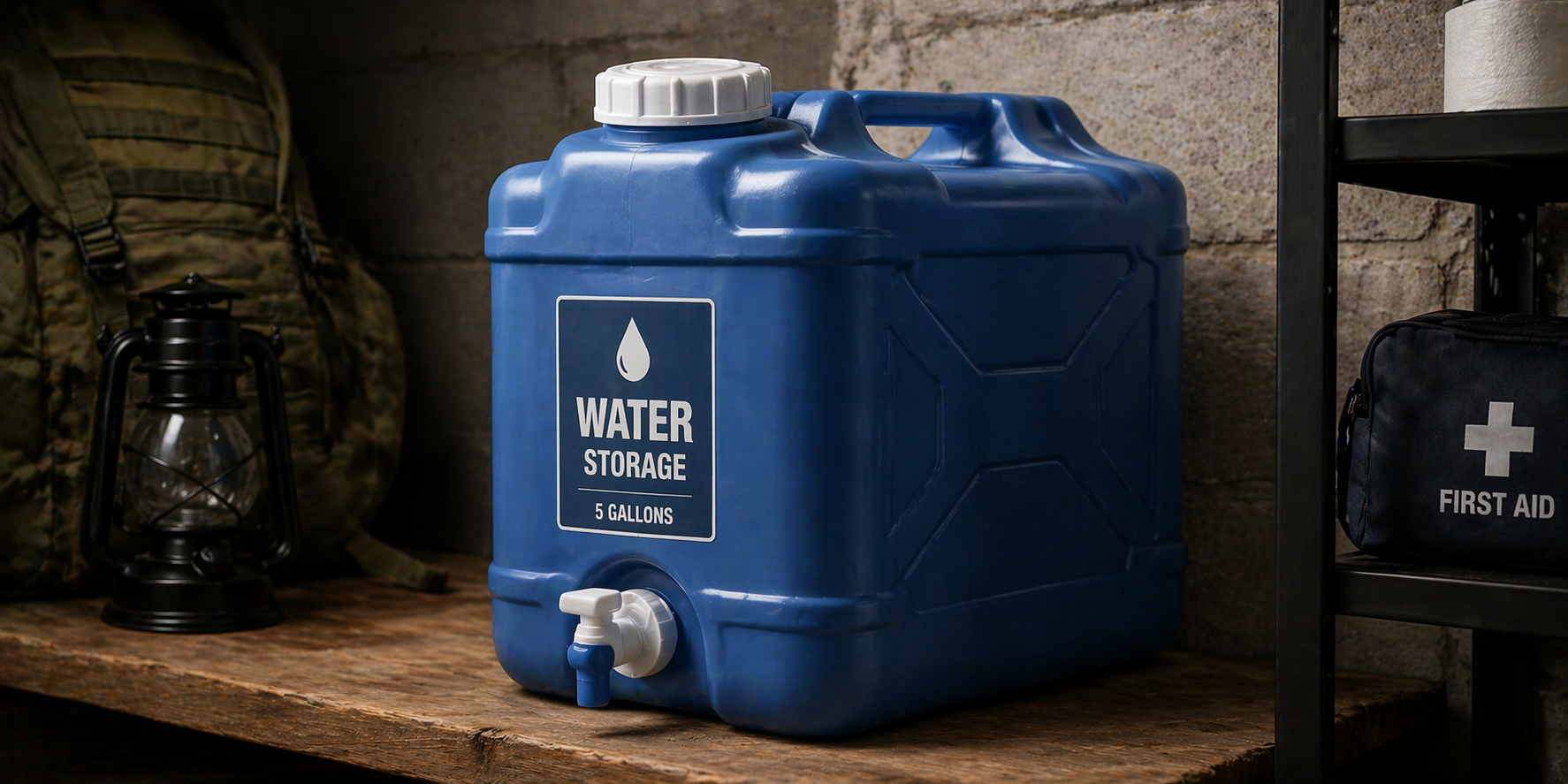
Water is the first thing you run out of — and the hardest to replace. A solid emergency setup includes both short-term access and long-term storage. Here's what to buy at every stage.
Quick Comparison
The Rule of Thumb
1 gallon per person per day — but plan for 3. Water is used for hygiene, cooking, and hydration. Minimum: 3 days. Ideal: 2+ weeks.
Short-Term Water Storage (0-7 Days)
For apartments, quick evacuations, and starter kits. Focus on portability and easy rotation.

WaterBOB Bathtub Bladder (100 gal)
Fills from the tap before an emergency. 100-gallon capacity, food-grade.

WaterBrick 3.5-Gallon Containers
Stackable, interlocking, easy to store in closets or under beds.

Scepter 5-Gallon Water Jug
Food-grade, BPA-free, stackable. Keep several for your household.
Long-Term Water Storage (2+ Weeks)
For homes, garages, and community storage setups. Prioritize capacity and reliability during extended outages.

55-Gallon Water Storage Barrel
High capacity for home storage. Requires bung wrench and siphon pump.
Filtration and Purification
Always pair storage with a filtration backup. If your stored supply runs out or gets compromised, you need a way to treat water from any source.

Sawyer Squeeze Water Filter
Gravity or squeeze filter. 100,000-gallon rated, no batteries.

LifeStraw Personal Water Filter
Straw-style individual filter. Compact, lightweight, good backup option.

Aquatabs Water Purification Tablets
Chemical purification backup. Long shelf life, compact.
Start small if needed — but don't rely only on bottled water. A mix of storage and filtration is the safest approach.
Track your water supply in +MAP.
+MAP's Basic Preparedness checklist includes your water storage targets by household size — so you know exactly where you stand.
Join now for freeThe guides are free. The platform makes them stick.
Most groups download a checklist and nothing changes. MAP gives your group the infrastructure to actually act on it — skill tracking, task assignment, event coordination, and a shared knowledge base your members can find offline.
- No more tracking member skills in a spreadsheet
- No more losing resources in group chats
- No more showing up to a crisis figuring it out for the first time
No spam. No pressure. Early access when we launch.